Content Marketing Strategy for Australian Businesses: From Planning to Pipeline in 2025
Seventy percent of Australian SMEs are producing content. Blog posts, LinkedIn updates, newsletters, the occasional video. Yet fewer than 15% have a documented content marketing strategy behind any of it. That gap is not a minor inefficiency. It is where leads are lost, budgets are wasted, and competitors who actually know what they are doing pull ahead while everyone else wonders why their content is not converting.
In 2025, the landscape has shifted again. Google's AI Overviews are absorbing clicks that used to flow to organic results. Zero-click searches are becoming the norm, not the exception. Paid media costs are climbing. And buyers, particularly in B2B markets, are conducting more research independently before they ever speak to a salesperson. Against that backdrop, owned content is not a nice-to-have. It is one of the few assets that compounds in value over time, builds trust before the first conversation, and keeps working long after you have stopped paying for it.
This guide walks through how to build a content marketing strategy that actually generates pipeline for your Australian business. Not a strategy that looks good in a slide deck and then sits untouched. A working system, built around your ideal customers, your search landscape, and your commercial goals. This is the same approach we use at 3P Digital with clients across professional services, recruitment, finance, and health and fitness, and it follows the same Profile, Plan, Perform framework that underpins every engagement we run.
Key Takeaways
Fewer than 15% of Australian SMEs have a documented content strategy, which means having one is already a competitive advantage
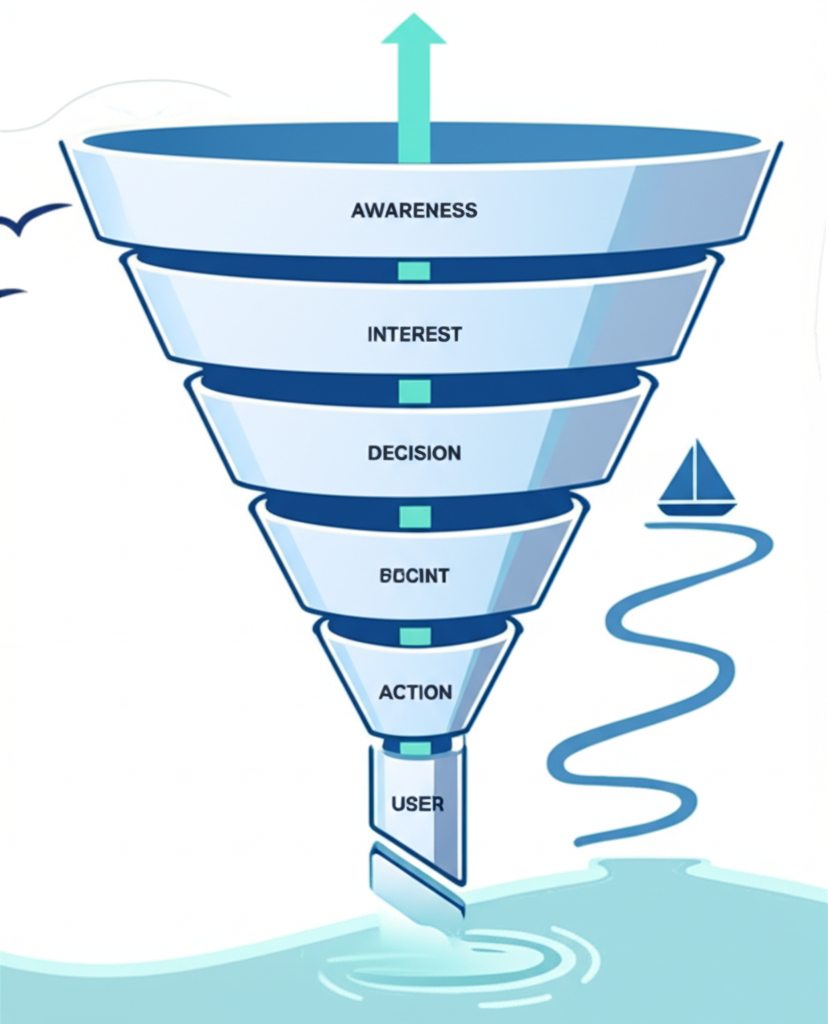
Strategic content marketing addresses specific buyer intent at each stage of the funnel, not just top-of-funnel awareness
The most effective content formats for Australian B2B lead generation include pillar pages, comparison content, case studies, and LinkedIn thought leadership
Distribution is just as important as creation. Publishing without a distribution plan means most of your content will never reach your target audience
Content marketing ROI is measurable through assisted conversions, pipeline influence, and keyword-to-revenue attribution in GA4
Results from content marketing compound over time. Most businesses see meaningful pipeline contribution within six to twelve months of consistent, strategic execution
Summary Table: Strategic vs Tactical Content Marketing
Factor | Tactical Content Publishing | Strategic Content Marketing |
Goal | Fill the content calendar | Generate pipeline and revenue |
Audience clarity | General or assumed | Documented ICP with intent mapping |
Keyword targeting | Ad hoc or volume-chasing | Funnel-stage aligned to commercial intent |
Content formats | Whatever is easiest | Chosen based on buyer behaviour and platform |
Distribution | Publish and hope | Multi-channel amplification plan |
Measurement | Page views and likes | Assisted conversions, pipeline influence, CAC |
Time horizon | Short-term campaign | 6 to 24-month compounding asset |
Team accountability | Whoever has time | Clear ownership and editorial governance |
Why Content Marketing Matters More in 2025
The Click Is Getting Harder to Win
Organic search used to be relatively straightforward. Rank for the right keywords, earn the click, convert the visitor. That model is under pressure. Google's AI Overviews, which rolled out in Australia through 2024 and expanded significantly into 2025, now answer many informational queries directly in the search results page. SparkToro research has consistently shown that a significant and growing proportion of Google searches result in zero clicks. For informational content, that number is climbing past 60% in some categories.
This does not mean SEO is dead. It means the game has changed. Clicks are increasingly going to branded content, to sources Google trusts as authoritative, and to queries with clear commercial or navigational intent. If your content strategy is built entirely around chasing informational traffic with no clear path to conversion, you are going to find 2025 frustrating. Our SEO services are built around this reality, focusing on search demand that drives qualified traffic, not just volume.
Buyers Are Doing More Research Before Contacting You
The 2024 Demand Gen Report found that 62% of B2B buyers consume between three and seven pieces of content before they speak to a sales representative. In Australia's professional services, finance, and technology sectors, that number skews even higher. Your prospects are reading your competitors' case studies, comparing services on review platforms, watching LinkedIn videos, and forming opinions about who they want to work with long before they fill out a contact form.
This is the fundamental opportunity in content marketing. If you are not present in those research moments, your competitor is. And by the time a prospect reaches out, they are often already inclined toward someone else. Content marketing lets you shape that pre-sale journey.
Owned Content Compounds. Paid Media Does Not.
Paid media is effective. We use it at 3P Digital and it generates results for our clients. But it stops the moment you stop paying. A well-optimised pillar page, a strong case study, a definitive comparison guide, these assets can generate traffic, leads, and pipeline for years. HubSpot's research shows that companies with strong content programs generate 3.5 times more leads than those without them, at a cost per lead that decreases significantly over time as the content compounds.
For Australian SMEs operating under real budget constraints, the long-term compounding effect of content marketing is one of the most powerful levers available. The key is doing it strategically, not just doing it.
Building Your Content Strategy: The 3P Approach
At 3P Digital, every content engagement runs through the same three-phase framework: Profile, Plan, Perform. It sounds simple. The execution is where most businesses fall short.
Phase 1: Profile Your Audience
You cannot create content that converts if you do not know exactly who you are trying to convert and what they are thinking at each stage of their buying journey. This is where most Australian businesses skip a step. They make assumptions about their audience, write content for those assumptions, and then wonder why it does not resonate.
The first step is building a proper Ideal Customer Profile (ICP). Not a generic persona with a stock photo and a made-up name. A data-driven ICP that identifies the specific company types, roles, challenges, goals, and objections of your best-fit customers. We typically build ICPs using a combination of CRM data analysis, customer interviews, sales team input, and competitor research.
From the ICP, we conduct intent mapping. This means identifying what your ideal customer is actually searching for, asking, and consuming at each stage of their buying journey. At the awareness stage, they are trying to understand and define a problem. At the consideration stage, they are evaluating options and approaches. At the decision stage, they are comparing specific providers and looking for proof that you can deliver. Every piece of content you create should be mapped to a specific stage of that journey for a specific segment of your ICP.
Intent mapping also feeds directly into keyword research. We are not looking for the highest volume keywords. We are looking for the keywords that indicate buying intent and align with what our ICP is actually searching for. A mortgage broker in Melbourne targeting first-home buyers needs very different content to one targeting property investors. The intent, the questions, and the language are completely different, even if both segments are searching for "home loan" adjacent terms.
Phase 2: Plan Your Content Around Demand and the Funnel
Once you have a clear picture of your audience and their intent, you can build a content plan that actually makes commercial sense. This is where many businesses get stuck. They open a blank spreadsheet, brainstorm topics, and end up with a list of blog post ideas that have no coherent structure and no clear path to conversion.
A proper content plan has three components: a content architecture, a keyword map, and a publishing and distribution calendar.
The content architecture defines the structure of your content ecosystem. For most businesses, this means building pillar pages on your core topics, supported by cluster content that addresses specific questions, subtopics, and variations around each pillar. The pillar page is comprehensive, authoritative, and targets a broad core keyword. The cluster content targets more specific, often longer-tail queries and links back to the pillar. This structure signals topical authority to Google, improves internal linking, and creates clear user journeys through your content.
The keyword map assigns specific target keywords to each piece of planned content, aligned to funnel stage. Awareness content might target informational queries like "what is content marketing" or "how to generate leads for a recruitment agency." Consideration content targets comparison and evaluation queries. Decision content targets branded queries, location-specific queries, and service-specific terms with clear commercial intent.
The publishing calendar then sequences content creation and distribution over time, balancing quick wins with longer-term authority-building. We typically recommend a minimum publishing cadence of two to four pieces of substantive content per month for SMEs, with a higher cadence where budget allows. Consistency matters more than volume. A business that publishes two well-researched, properly optimised articles per month for twelve months will outperform one that publishes twenty articles in January and then goes silent.
You can explore how we structure this in detail through our 3P Framework.
Phase 3: Perform Through Creation, Distribution, and Measurement
This is where the work gets done and where most agencies and in-house teams drop the ball. Content creation is only one-third of the performance phase. Without distribution and measurement, it is largely wasted effort.
For creation, we focus on a few principles. Every piece should be the best available resource on its topic in the Australian market. That means going deeper than competitors, including original data or examples where possible, and always prioritising the reader's experience over keyword density. Google's Helpful Content guidance makes clear that content created primarily to rank, rather than to help a real person, is being actively devalued. Writing for search engines instead of humans is one of the most common and most damaging mistakes we see Australian businesses make.
Distribution is the multiplier. A piece of content published to your blog and left to find its own audience is like printing a brochure and leaving it in your office. You need a distribution plan that includes email to your list, LinkedIn amplification, repurposing for other formats, outreach to relevant publications, and in some cases paid amplification to seed the content with the right audience. We cover distribution channels in detail in the next section.
Measurement closes the loop. You need to know which content is driving pipeline, not just which content is getting page views. This requires proper setup in GA4, conversion tracking, and ideally a CRM integration that lets you attribute closed revenue back to the content touchpoints that influenced it. Our analytics services are built specifically to give clients this kind of visibility.
Content Types That Drive Leads in Australia
Pillar Pages
Pillar pages are the cornerstone of topical authority. A well-built pillar page on a core topic like "content marketing for Australian businesses" or "recruitment marketing strategies" can rank for dozens of related keywords simultaneously, serve as the primary destination for inbound traffic on that topic, and act as a conversion hub by linking to relevant service pages, case studies, and calls to action. We have seen pillar pages drive consistent organic leads for clients two and three years after publication with minimal ongoing investment.
Comparison and Evaluation Content
Comparison content targets buyers in the consideration and decision stages. "Agency vs in-house content marketing," "best CRM platforms for Australian SMEs," "HubSpot vs Salesforce for recruitment agencies" are all examples of content that attracts readers who are actively evaluating options. This is high-intent traffic. These readers are not casually browsing. They are close to making a decision, and if your content helps them make it, you are well positioned to be the next step they take.
Case Studies
Case studies are consistently the highest-converting content format for B2B businesses. Prospects want proof, not promises. A well-structured case study that documents a specific client's challenge, the approach taken, and the measurable outcomes achieved does more selling than any sales page. We format case studies with clear metrics, direct client quotes, and a specific call to action at the end. Our own case studies follow this format for exactly that reason.
Data-Driven Articles and Original Research
Original data is one of the fastest ways to earn backlinks, media mentions, and topical authority. If you survey your customer base, analyse industry data, or compile benchmarks that do not exist elsewhere, you create a piece of content that other publications will cite and link to. For Australian businesses, there is often a gap in locally relevant data. International benchmarks dominate most searches, and a piece of content that presents Australian-specific findings stands out significantly.
Video Content
Video consumption in Australia continues to grow. YouTube is the second-largest search engine in the country. Short-form video on LinkedIn and Instagram Reels drives significant organic reach for brands that use it consistently. For B2B businesses, explainer videos, thought leadership interviews, and process walkthrough videos are particularly effective at building trust with prospects who are evaluating whether to engage. Video does not need to be high production value to be effective. Clarity, credibility, and consistency matter more than a polished studio look.
LinkedIn Thought Leadership
For Australian B2B businesses, LinkedIn is the distribution channel with the highest potential return relative to investment. The organic reach available on LinkedIn for individual creator content still significantly exceeds most other platforms. Founders, directors, and senior practitioners who publish consistently on LinkedIn, sharing genuine insights, specific examples, and useful frameworks, build an audience that converts at rates that paid media rarely matches. We coach founders on LinkedIn content strategy as part of several of our content marketing engagements because the results speak for themselves.
Distribution Channels for Australian Markets
Organic Search
Organic search remains the backbone of most content marketing programs. The goal is to rank for queries that your ICP is actively using during their research process. With proper keyword mapping, on-page optimisation, and a strong internal linking structure, organic search can generate consistent, qualified traffic without ongoing media spend. The caveat is time. Organic rankings typically take three to six months to develop for competitive terms, which is why starting early and being consistent matters.
Email Marketing
Your email list is your most valuable owned channel. Unlike social media followers or organic rankings, your email list cannot be taken from you by an algorithm change or platform decision. For Australian businesses, email remains one of the highest ROI channels available. Distributing your content to your email list ensures it reaches people who have already expressed interest in your business, drives traffic to new content quickly, and keeps your brand present during long B2B buying cycles.
For B2B content marketing in Australia, LinkedIn is non-negotiable. This means both company page content and individual creator content from founders and practitioners. LinkedIn posts, articles, newsletters, and short-form video all have a role to play. The key is consistency and genuine insight. Content that simply promotes your services performs poorly. Content that shares real expertise, specific examples, and honest perspectives on your industry builds an audience and generates inbound enquiries.
Industry Publications and Media
Australian trade publications, industry associations, and professional media outlets are often looking for expert contributors. Getting published in a relevant industry publication earns you a credible backlink, exposes your brand to a qualified audience, and builds authority in your category. For professional services firms in particular, contributed articles to publications like Business Insider Australia, SmartCompany, or industry-specific outlets can drive significant brand awareness among exactly the right audience.
Paid Amplification
Paid amplification is the fastest way to get content in front of a targeted audience. LinkedIn Sponsored Content, Meta traffic campaigns, and Google Display remarketing can all be used to amplify high-quality content to specific audiences. We use paid amplification most effectively to seed new pillar pages and case studies with the right audience quickly, accelerating the organic momentum that follows. A budget of even $500 to $1,500 per month in amplification can significantly accelerate the early results from a content program.
Measuring Content Marketing ROI
One of the most common objections we hear from Australian business owners about content marketing is that it is hard to measure. This is partly true and largely a measurement problem, not a content problem.
Setting Up Proper Attribution in GA4
Google Analytics 4 supports multi-touch attribution modelling, which means you can see every touchpoint a user had with your content before they converted, not just the last one. This is critical for content marketing, because a blog post that was read three weeks before someone booked a call will show as zero contribution in a last-click model but significant contribution in a data-driven attribution model. Setting up GA4 correctly, with conversion events, user journeys, and channel attribution configured properly, is the foundational step.
Assisted Conversions
In GA4, you can view assisted conversions, which show you which content pieces and channels contributed to a conversion even when they were not the final touchpoint. This data almost always reveals that content is driving significantly more pipeline than last-click attribution suggests. We have seen clients discover that their blog content was influencing 40 to 60% of all conversions when viewed through assisted conversion data, despite appearing to drive almost no leads in their previous last-click reporting.
Pipeline Influence and Revenue Attribution
For businesses with a CRM, the most powerful measurement approach is connecting content consumption data to pipeline stages and closed revenue. This requires tagging content UTMs consistently, connecting your CRM to your analytics platform, and tracking which content pieces appear in the journey of prospects who converted to customers. When you can show that prospects who consumed three or more pieces of content before booking a call close at a 40% higher rate than those who did not, you have a compelling ROI case for content investment.
Common Mistakes Australian Businesses Make with Content Marketing
No documented strategy. The statistic at the start of this article is real. Most Australian businesses producing content are doing so without a documented strategy. This means no ICP, no keyword map, no funnel alignment, and no measurement plan. The content might occasionally perform well by accident, but it will never compound in the way strategic content does.
No distribution plan. Creating great content and then publishing it with no distribution plan is one of the most common and most costly mistakes. Even excellent content needs an audience. Distribution should be planned before the content is created, not treated as an afterthought.
Writing for search engines instead of humans. Keyword stuffing, thin content, content that technically targets the right query but provides no genuine value to the reader. Google has become extremely good at identifying and devaluing this kind of content. More importantly, even if it ranks, it does not convert. Readers who land on a page and immediately recognise that it was written to rank rather than to help them will leave immediately.
No conversion paths. Content that educates without converting is awareness spend, not pipeline generation. Every piece of content should have a logical next step for the reader. A contextually relevant call to action, a link to a related case study, an offer to book a strategy session. The content should serve the reader AND move them toward a commercial outcome.
Inconsistency. Content marketing rewards consistency over time. Businesses that publish intensively for three months and then go quiet get none of the compounding benefit. A sustainable publishing cadence, maintained consistently over twelve to twenty-four months, will outperform any short-term campaign approach.
Ignoring content quality signals. Time on page, scroll depth, return visits, and click-through rate from search results are all signals Google uses to evaluate whether your content is genuinely useful. Content that gets clicks but immediately loses readers is actively penalised over time. Quality matters.
Real Case Studies: Content-Driven Lead Generation
Case Study 1: Mortgage Broking Firm, Melbourne
A Melbourne-based mortgage broking firm came to us generating fewer than five organic leads per month from their website. They had a blog with thirty-plus posts, none of which were strategically mapped to buyer intent or properly optimised. We conducted a full content audit, built a pillar page strategy around their core ICP segments (first-home buyers, property investors, and refinancers), and rebuilt their keyword targeting from the ground up.
Within nine months, organic traffic had grown by 214%. More importantly, organic lead volume increased from fewer than five per month to an average of thirty-one qualified enquiries per month. The pillar pages targeting refinancing queries alone generated eleven leads in month nine. Total revenue attributed to content-driven leads over the twelve-month period exceeded $180,000 in broker commissions on settled loans.
"Before working with 3P Digital, we were publishing content but seeing nothing from it. Now our website is our best performing lead source, and the results keep improving month on month." — Principal Broker, Melbourne
Case Study 2: B2B Recruitment Agency, Sydney
A Sydney-based recruitment agency specialising in technology roles wanted to reduce their dependence on job board advertising and generate more inbound client leads. We developed a LinkedIn thought leadership program for the agency's two founding directors, combined with a monthly content strategy producing two to four long-form articles per month targeting HR managers and hiring leaders in Sydney's technology sector.
Over eight months, the founding directors grew their combined LinkedIn audience by 4,200 followers, with average post reach of 3,000 to 8,000 impressions per piece of original content. The agency received thirty-seven inbound enquiries from new clients over the eight-month period, attributing twenty-two of them directly to LinkedIn content touchpoints in their CRM. Average deal value for inbound clients was 34% higher than outbound-sourced clients, reflecting better fit and lower price sensitivity.
Frequently Asked Questions
How much does content marketing cost in Australia?
Content marketing investment in Australia varies significantly depending on scope, quality, and whether you work with an agency or in-house. For SMEs working with a specialist agency, a foundational content marketing program typically starts at $2,500 to $5,000 per month, covering strategy, content creation, SEO optimisation, and basic distribution. More comprehensive programs that include paid amplification, video production, and multi-channel distribution can run from $7,000 to $15,000 per month. The key is matching investment to your revenue goals. A business targeting $500,000 in new revenue from content should be prepared to invest meaningfully over twelve to eighteen months to achieve it. You can book a free strategy session to get a clearer picture of what a program would look like for your specific situation.
How long does it take to see results from content marketing?
Honest answer: it depends on your starting point, your competitive landscape, and the quality of execution. For businesses starting from scratch with a new website, expect six to twelve months before content marketing becomes a meaningful lead source. For businesses with an existing domain authority and some content already in place, results can appear within three to six months of implementing a proper strategy. The compounding nature of content means results accelerate over time. Month twelve typically produces significantly more pipeline than month three, and month twenty-four more than month twelve. This is what makes consistency so important.
Should I do content marketing in-house or use an agency?
Both can work. The right choice depends on the skills available internally, the volume of content required, and whether you have someone with genuine expertise in SEO, content strategy, and distribution to lead the program. In-house content marketing works well when you have a dedicated content marketing manager or CMO with a strong strategic foundation. It often breaks down when content creation falls to someone who is also doing five other jobs. Agencies bring strategic depth, specialist skills, and execution capacity that most SMEs cannot afford to hire internally. The risk with agencies is misalignment on strategy and a focus on output over outcomes. Look for an agency that reports on pipeline and revenue, not just page views. Get in touch with us to discuss whether an agency or hybrid model makes most sense for your business.
How often should I publish content?
Consistency trumps volume. For most Australian SMEs, a publishing cadence of two to four substantive pieces of content per month is achievable and effective. Substantive means properly researched, properly optimised, and genuinely useful, not 300-word posts that add nothing to the conversation. Businesses that can sustain a higher cadence of quality content will see results faster, but never at the expense of quality. One outstanding piece of content per month is worth more than ten mediocre ones. Your publishing frequency should reflect what you can execute consistently over twelve months, not what looks ambitious on a calendar.
What are the best content marketing platforms for Australian B2B businesses?
For Australian B2B businesses, the most effective content marketing channels are organic search (Google), LinkedIn, and email. Organic search drives discovery from buyers actively researching. LinkedIn builds relationships and authority with decision-makers in your target industries. Email nurtures prospects through longer buying cycles and drives return visits to new content. Depending on your industry, YouTube, industry publications, and podcast placements can also be highly effective. We rarely recommend spreading across every platform simultaneously. Start with the two or three channels where your ICP actually spends time, execute well there, and expand once you have traction.
How do I measure the ROI of content marketing?
ROI measurement starts with proper setup. You need GA4 configured with conversion events, multi-touch attribution enabled, and ideally a CRM integration that connects lead source data to pipeline and revenue. From there, the key metrics to track are organic traffic growth, assisted conversions (content pieces that appeared in the journey before a conversion), cost per lead from content versus other channels, and pipeline influenced by content touchpoints. The full picture of content marketing ROI typically becomes clear at the six to twelve-month mark, when you have enough data to model the relationship between content investment and revenue contribution. Our analytics services help clients build this measurement infrastructure from the ground up.
What is the difference between content marketing and SEO?
SEO and content marketing are closely related but distinct disciplines. SEO is the technical and strategic practice of optimising your website and content to rank in search engines, covering site structure, page speed, backlinks, keyword targeting, and on-page optimisation. Content marketing is the strategic creation and distribution of valuable content to attract, engage, and convert a target audience. In practice, the two work together. Content marketing without SEO means your content may never be discovered through search. SEO without content marketing means you have technically sound pages with nothing worth ranking. Our SEO services and content marketing services are designed to work in combination, which is why the results from integrated programs significantly outperform either in isolation.
References
Content Marketing Institute, B2B Content Marketing Benchmarks, Budgets, and Trends Report (2024) — The CMI's annual research report covering content marketing adoption, strategy documentation rates, and effectiveness metrics across B2B marketers globally, including data on the gap between businesses that produce content and those with documented strategies.
HubSpot, State of Marketing Report (2024) — HubSpot's annual marketing industry survey covering lead generation benchmarks, content format performance, ROI measurement approaches, and adoption of content marketing across company sizes and industries.
Semrush, State of Content Marketing Global Report (2024) — Semrush's global research into content marketing effectiveness, covering publishing frequency benchmarks, content format performance, distribution channel effectiveness, and the correlation between content investment and organic traffic outcomes.
Demand Gen Report, B2B Buyer Behaviour Study (2024) — Research into how B2B buyers conduct research before engaging with vendors, including data on content consumption volumes during the buying journey and the influence of content on purchase decisions.
SparkToro and Datos, Zero-Click Search Research (2024) — Research quantifying the proportion of Google searches that result in no click to an external website, broken down by search category and intent type, with implications for organic content strategy.
Google Search Central, Creating Helpful, Reliable, People-First Content (2024) — Google's official guidance on the factors that determine content quality in search rankings, covering E-E-A-T principles, the Helpful Content system, and what distinguishes content created for people versus content created primarily for search engines.